Anti-elf prejudice in Tarrgein
The Ballad of the Last DragonAnti-elf prejudice in Tarrgein is not confined to formal persecution or openly violent encounters; it enters ordinary work, travel, conversation, and self-perception. For Sylvaine Abelan, the most recognizable sign of her heritage is her pointed ears, and that visible difference makes concealment a practical condition of survival. The prejudice she encounters is therefore both public and intimate: it determines how she performs, where she can safely stand, how she dresses, and whether Tarrgein can feel like home.
Everyday Concealment
Sylvaine routinely keeps her ears hidden beneath a velvet cap while performing for coins. The cap is not merely part of her stage costume, although she takes pride in its crushed-red velvet and large black plume; it also protects her from hostile attention. She has learned that displaying her elven features is poorly received in most places, including Tarrgein. Older superstition about the ancient elves may not have crossed the sea with the same force, yet ignorant prejudice has taken root in the country all the same. Even after people around the tavern have gradually accepted that she will not use “evil she-elf magic to bewitch them,” she receives more appreciation when her ears remain safely covered. Her livelihood thus depends on managing an identity that others have marked as threatening before she has spoken or played a note.
The physical cost of that concealment is immediate. During a performance, Sylvaine’s hair, neck, and forehead become damp with sweat, and removing the cap brings instant relief. She nevertheless prefers discomfort to hunger, accepting heat as the price of earning coin. The scene exposes the economic dimension of discrimination: Sylvaine cannot simply reject hostile assumptions when doing so might reduce the audience’s willingness to pay. Her red cap simultaneously presents a glamorous performer and shields the bodily feature that would make her vulnerable as an elf.
Suspicion and Belonging
The pressure to conceal herself follows Sylvaine beyond the tavern. When she challenges Jaromir to say whether he would allow her death through deliberate inaction, she removes her cap and tucks her hair behind her ear, turning the pointed ear into a visible statement and a test of trust. The gesture is confrontational because the ear has been made socially dangerous by prejudice, yet Jaromir responds without surprise and promises that he would not let a blade pass him and claim her life as an accident. His reaction briefly separates personal loyalty from the wider culture that has taught Sylvaine to expect rejection.
That expectation remains embedded in her understanding of home. When Jaromir says he is bringing her back because it is her home, Sylvaine rejects the description and tries to hide her ears in her hair. Her denial shows that belonging cannot be established by geography alone when the surrounding society treats her heritage as suspect. Home is instead something she says she will recognize only when she finds it, a response shaped by displacement and by the repeated demand that she disguise the part of herself others condemn.
Public Insults and Social Contagion
Prejudice also appears as casual speech, where it is made ordinary by repetition. Tavern patrons joke about whether elves are supposed to be pretty and speculate about whether women connected with Aeron Fowler are elvish or dwarven. Such remarks reduce elven identity to an object of gossip, attractiveness, and sexual comparison. The comments may be delivered as humor, but their effect is to establish a social environment in which elves are discussed rather than treated as equal participants.
A more direct encounter occurs when a woman identifies Sylvaine by her hat as “that bard.” Sylvaine introduces herself formally, removes the cap, tucks her hair behind her ear, and offers the disclosure as an act of self-definition. The woman’s response is not acceptance: she interprets Sylvaine as someone expecting solidarity merely because they are both elves, then sneers at the supposed commonality. The exchange reveals prejudice within a marginalized community as well as between elves and humans; shared elven identity does not erase differences in class, experience, or attitude, and Sylvaine’s attempt at connection is answered with suspicion.
Threat Made Physical
The most dangerous form of Tarrgein’s prejudice appears when a tavern patron yanks Sylvaine by the shoulder and calls her “knife-ear,” telling her that she is fortunate to be allowed into the tavern and threatening to show her what “your kind” deserves. The insult converts a bodily feature into a category of collective guilt, while the command that she fetch drinks treats her as both inferior and expendable. Sylvaine has a retort ready, but fear closes her throat before she can speak. Her legs go numb, her head spins, and the prospect of another panic attack takes over her body.
The same vulnerability shapes her precautions when she finds herself alone in a field at night and hears three men approaching. She climbs into a concealed branch rather than risk being seen, because she cannot run without revealing her presence and has learned that being isolated from witnesses is dangerous. She carries a short sword at Neith’s insistence and a shepherd’s sling, but the existence of those weapons does not eliminate the threat; it merely gives her limited means of resisting it. Her bitterness comes from having accepted this as a wretched necessity.
When the men find her, the violence becomes sexual and bodily. She bites one attacker’s hand hard enough to draw blood, is struck across the cheek, and struggles as her broken lute cuts into her back. Her cap is crumpled in a fist and forced into her mouth, turning the object that usually conceals her identity into an instrument of silencing. The attackers hold her legs and wrists while one tries to overpower her. The scene demonstrates how anti-elf prejudice intersects with gendered violence and economic vulnerability: the men’s earlier tavern presence, their isolation of her, and their treatment of her body all grow from a social order that has already taught them that an elf woman can be insulted, controlled, and denied protection.
Panic and Defiance
Sylvaine’s reactions show that prejudice operates not only through what others do but through what she has been trained to anticipate. After recalling blood filling the cracks in a dead man’s lips, she tries to insist that she is stronger, yet panic grips her chest until she feels something might break. At another moment, the threat from the tavern patron produces numbness, dizziness, and a cold flutter in her chest before any physical assault begins. These responses are not evidence that she accepts the prejudices against her; they are the bodily consequences of repeatedly calculating danger in environments where her identity can trigger hostility without warning.
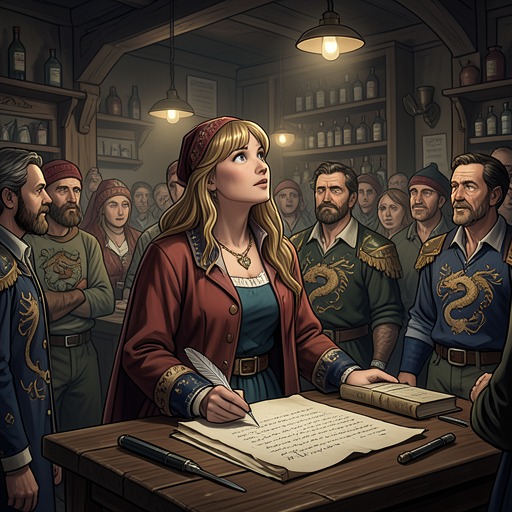
Against that pressure, Sylvaine repeatedly turns visibility into performance. She removes her cap, names herself as Sylvaine Abelan, and claims the roles of bard, defender of written and spoken word, acting notary, and formidable slinger of stones. When Magistrate Ridion dismisses her as “an elf who thinks she’s more than gutter refuse,” she laughs rather than surrendering the terms of the encounter. Her defiance does not make the insult harmless—Jaromir immediately grips the magistrate by the throat and warns him to watch his tongue—but it prevents Ridion’s contempt from becoming the final definition of her worth. Her artistry, wit, and public self-naming become methods of resisting a culture that would prefer her hidden, silent, and grateful merely to be admitted.
Institutionalizing Difference
The prejudice surrounding elves in Tarrgein is sustained not only by individual cruelty but also by the assumptions that make exclusion appear natural. Sylvaine has learned that people may tolerate her presence only after first requiring reassurance that she will not use “evil she-elf magic to bewitch them.” Even this limited acceptance leaves the burden of proof on her: she must remain visibly harmless, commercially useful, and careful not to expose the feature that marks her as elven. The social order therefore treats her identity as a potential disturbance that she is expected to manage herself.
That logic becomes explicit when Magistrate Ridion describes Sylvaine as “an elf who thinks she’s more than gutter refuse.” His insult joins ancestry to class contempt, denying her both dignity and the right to claim authority. Sylvaine’s introduction of herself as a bard, defender of written and spoken word, acting notary, and slinger is consequently more than theatrical self-promotion. It is a counter-list of capacities offered against a description designed to reduce her to race and presumed social rank. Jaromir’s immediate physical warning to Ridion exposes the stakes of the exchange: anti-elf prejudice is not harmless rhetoric when an official can voice it as a judgment about who deserves respect.
The culture’s hostility also circulates through casual entertainment. Patrons wonder whether elves are supposed to be pretty and fold elven identity into gossip about women and sexual availability. Such remarks make the group’s assumptions seem playful while continually reminding Sylvaine that her body is being assessed as an exotic or inferior object. The repeated language of “your kind” and “knife-ear” turns an individual into a representative of a despised category, allowing strangers to claim that any humiliation inflicted on her is justified by what she is rather than by anything she has done.
Sylvaine’s encounters show why concealment, vigilance, and performance become intertwined. The cap hides her ears, the lute gives her a livelihood, and the weapons Neith insists she carry offer some preparation for danger, yet none of these tools removes the unequal conditions around her. The cap can be admired as beautiful while also being forced into her mouth; the lute can establish her place in a tavern while its broken remains press into her back during an assault. These reversals show how objects associated with work and self-expression can become defenses, liabilities, or instruments of control when anti-elf prejudice is joined to violence against a woman traveling without reliable protection.
Prejudice as a Condition of Movement
Anti-elf prejudice in Tarrgein governs not only how Sylvaine Abelan is received but also how she calculates movement through public and private space. In the tavern, she must remain useful and unobtrusive; on the road, she must establish whether companions will protect her; in the countryside, she must avoid being isolated with men whose intentions she cannot trust. Her decision to climb into a concealed tree branch when three tavern patrons approach is therefore a practiced response to social danger, not a moment of unfounded alarm. She cannot safely run without exposing herself, and she has already accepted the bitter necessity of avoiding places where no witnesses can intervene. The short sword Neith has insisted she carry and the shepherd’s sling in her pocket show that vigilance has become part of her equipment, even though weapons cannot undo the vulnerability produced by her gender, poverty, and elven identity.
The prejudice also alters the meaning of recognition. When the woman at the tavern identifies Sylvaine as “that bard,” the label initially seems to acknowledge her profession rather than her ancestry. Yet the encounter quickly turns toward suspicion once Sylvaine removes her cap and reveals her pointed ear. Her formal self-introduction attempts to control the terms of disclosure, but the woman interprets it as an expectation of instant solidarity between elves and rejects the possibility that they share anything beyond their heritage. This moment complicates any simple division between persecutors and victims: a community marked by the same stigma can still reproduce distrust, hierarchy, and exclusion internally. Elven identity is not treated as a secure source of belonging because prejudice has made it a contested and socially dangerous category.
Sylvaine’s body records the pressure even when she continues to speak with confidence. After recalling the death of a companion, she tries to insist that she is stronger, but panic stalls her words and fills her chest until she feels something might break. When the tavern patron calls her “knife-ear,” seizes her, and threatens her on behalf of “your kind,” the reaction begins before she can answer: her throat tightens, her legs go numb, and her head spins. The fear is not agreement with the insult. It is the embodied consequence of living where an ordinary interaction can turn suddenly into racialized intimidation and physical control. Her later laughter at Magistrate Ridion’s contempt does not erase these reactions; it demonstrates another form of survival, one in which performance and wit contest the power of hostile observers to define her.
The resulting tension gives Sylvaine’s public persona its particular force. She can be dazzling, irreverent, and theatrically self-assured while still carrying the learned expectation that exposure may invite harm. Her velvet cap conceals her ears, but it also frames her as a performer; her lute earns coin, but the broken instrument later becomes part of the violence inflicted upon her; her self-description as bard, defender of written and spoken word, acting notary, and slinger asserts a range of abilities against the reduction of her to an “elf” or to “gutter refuse.” Anti-elf prejudice thus creates the conditions that her artistry continually answers: it demands concealment, yet her resistance depends on choosing when and how to become visible.